
Web Development
We are experts in web development, constantly experimenting, innovating, and implementing new ideas to build future-ready digital experiences. Our approach blends creativity with technical excellence, ensuring every website or web application we create is modern, scalable, and tailored to your unique needs. From cutting-edge UI/UX to robust backend systems and seamless integrations, we stay ahead of the curve by adopting the latest frameworks, tools, and best practices.
Web Design Impact Metrics
94%
of first impressions are related to web design, influencing how customers perceive a business instantly.
88%
of users won’t return to a website after a poor user experience, highlighting the need for high-performing and intuitive designs.
48%
Companies that regularly update and innovate their websites see a 48% higher conversion rate than those with outdated designs.
73%
of businesses say that modern, responsive web development directly improves customer engagement and retention.
Why Being Experts in Web Development Matters
In an ever-changing digital landscape, having a web development team that constantly experiments, innovates, and adapts is crucial to staying competitive. Modern users expect seamless experiences, fast performance, and intuitive design — and businesses that fail to deliver risk being left behind. Just as adaptive product architecture helps products evolve, a forward-thinking web development approach ensures your website or platform stays relevant, scalable, and engaging.
Innovation Signal

79%
of companies report that investing in new web technologies, frameworks, and design trends keeps them competitive in their industry.
Case studies and proof
Modern web development is the backbone of every SaaS and consumer product — fast, accessible, secure web experiences increase conversion, retention, and brand trust. Our web work spans high-traffic portals, e-commerce, campaign platforms, finance, healthcare, and creative communities. These case studies show how pragmatic architecture (SSR/JAMstack/hybrid), performance-first engineering, and observability yield measurable business outcomes: faster page loads, higher SEO-driven acquisition, lower bounce rates, and more resilient production behavior under load.
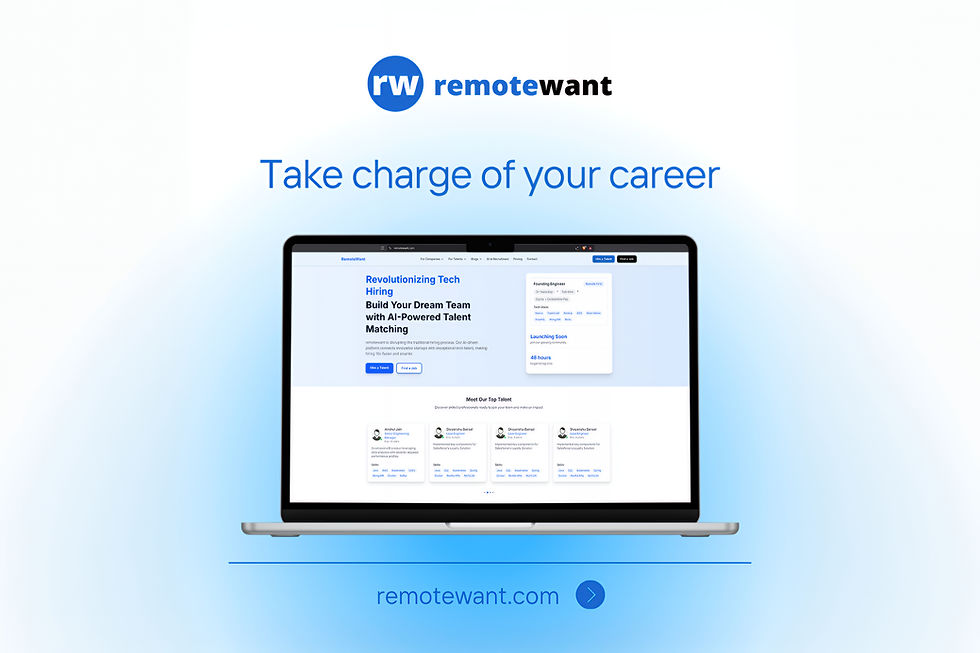
Remotewant
Scalable search and filtering UX with server-side rendering for fast discovery and indexable job listings.
_1710x1230.png)
Bubblegum
Lightweight pages and progressive loading patterns that sustain 100k+ monthly users with low TTFB.

Medrabbits
Caregiver and family portals featuring scheduling, secure messaging, and patient activity dashboards.

PaisaOnClick
Secure, compliant web flows for loan discovery and application with clear audit trails and form validation.
_2688x1536.png)
Insuranext
Web interfaces for surveyors and adjusters that combine document upload, imaging, and ML-backed estimators.
_2324x1700.png)
Jujubi
Responsive storefronts and merchant dashboards that prioritize conversion, inventory sync, and fast checkout flows.
_2560x1600.png)
1000X
Real-time campaign dashboards and templating tools that let marketers create and preview campaigns instantly.
_2688x1536.png)
Thought leadership
Web development today is a convergence of product design, front-end engineering, and platform ops: performance and accessibility are non-negotiable product features. Technical leaders should treat the web as a first-class channel—invest in server-side rendering or hybrid static approaches for SEO and speed, design for progressive enhancement so the product works across connection qualities and devices, and bake accessibility and privacy into the component lifecycle. The result is not just prettier pages but measurable business uplift: lower bounce, improved discovery, and higher conversion.
Equally important is operationalizing the web: instrument real-user monitoring (RUM), tie frontend metrics to business KPIs, and run web delivery like a platform with CI/CD, visual regression, and release gates. Choose the right architecture for the use case (JAMstack for content + scale; SSR/ISR for dynamic SEO content; CSR for app-like interactions), and adopt a single-source-of-truth component system so design and engineering move in lockstep. When web teams ship with guardrails around performance, accessibility, and observability, they deliver user experiences that scale and remain maintainable as product demands evolve.
Product ideas
Product ideas below are practical web platform features you can productize to speed delivery, improve UX, and make engineering repeatable: PWA accelerators, personalization APIs, hybrid SSR toolkits, component libraries, and experimentation sandboxes that convert design & performance best practices into developer-friendly products.
The PWA Accelerator is a turnkey product that converts web experiences into resilient, installable, offline-capable applications with best-practice caching, service-worker strategies, and push/engagement tooling. It bundles a tested service-worker template (cache-first strategies for critical assets, stale-while-revalidate for content), pre-configured web manifest patterns, and a battery & data budget layer to manage background sync and push frequency. The accelerator includes on-device heuristics (low battery, roaming) to adapt sync behavior, plus one-click install banners and analytics to measure PWA adoption and engagement. For commerce and content platforms this translates to improved repeat usage, conversion lift for returning users, and better retention on low-connectivity networks.
Operationally the product includes CI hooks for service-worker generation, automated audits (Lighthouse) on every PR, and telemetry-driven cache invalidation rules so updates reach users predictably. It also integrates with the push and campaign systems to enable re-engagement without increasing background battery costs. The developer UX focuses on a small API surface to mark critical assets and offline routes, letting product teams get the UX benefits of native-like experiences while keeping the web as the canonical source of truth. Over time, teams gain measurable gains in session frequency and user lifetime value without a separate native build.
A headless CMS combined with a personalization API creates a powerful ecosystem where content delivery is not only decoupled but also dynamic, tailored to each individual user. By leveraging server-side or edge-based personalization, businesses can ensure that visitors receive highly relevant content in real time. This system allows content editors to work in preview workflows, ensuring seamless publishing while maintaining strict control over brand consistency. Furthermore, the SDK for client-side personalization rules enables developers to integrate audience targeting, contextual recommendations, and adaptive layouts without reinventing the wheel.
The biggest advantage of this system lies in its ability to unify content management with personalization logic. Instead of building personalization as an afterthought, it becomes part of the content pipeline itself. This results in faster time-to-market for personalized campaigns, reduced engineering overhead, and better conversion metrics. Whether powering a media site, an e-commerce store, or a SaaS platform, the combination of headless CMS and personalization API ensures the digital experience stays fresh, contextual, and optimized for engagement.
A hybrid SSR/SSG toolkit provides the flexibility to generate pages both statically and dynamically, adapting to the specific needs of modern web applications. With support for Incremental Static Regeneration (ISR), the toolkit enables static pages to be updated on-demand, ensuring content remains fresh without requiring full rebuilds. This approach is highly beneficial for sites that demand both SEO performance and real-time content updates, such as blogs, marketplaces, and e-commerce platforms. CI/CD integration further ensures automated builds, deployments, and rollouts without disrupting user experience.
By merging the best of SSR (server-side rendering) and SSG (static site generation), the toolkit empowers developers to strike a balance between speed and flexibility. Businesses can deliver lightning-fast static pages for evergreen content while dynamically rendering frequently changing sections. This model optimizes resource usage, reduces infrastructure costs, and enhances scalability, all while ensuring customers consistently see accurate and timely information.
A universal component library, built for React and Web Components, ensures that design systems scale consistently across applications, platforms, and teams. With built-in support for accessibility, theming via design tokens, and detailed Storybook documentation, developers and designers can collaborate more effectively while reusing the same standardized building blocks. Automated visual regression tests safeguard design fidelity, while CI/CD enforcement of tokens guarantees that changes remain compliant with brand guidelines.
This approach reduces design fragmentation and accelerates product delivery. By relying on a unified system of reusable components, companies eliminate duplication of effort, minimize inconsistencies, and achieve a more coherent user experience across digital touchpoints. Whether deploying for mobile, web, or enterprise dashboards, the universal library allows teams to focus more on innovation and less on maintenance.
The web experimentation sandbox provides a controlled environment to design, run, and measure front-end experiments such as A/B tests and interaction-based trials. By integrating feature flags and automatic analytics metric wiring, it allows experiments to be rolled out safely and iterated upon quickly. Experiment lineage tracking ensures teams understand not just the results, but the entire context of what was tested and why.
This system empowers product managers, marketers, and developers to innovate faster while minimizing risk. Instead of deploying major features blindly, they can validate hypotheses through real-world user behavior before scaling. The sandbox lowers the barrier for experimentation, promotes a culture of evidence-based decision-making, and aligns business objectives with customer expectations—ultimately leading to higher product adoption and better user satisfaction.
Solution ideas
Solution Ideas below are implementation-ready patterns and platform components to operationalize robust web delivery: performance-first build pipelines, SSR/edge rendering patterns, accessibility automation, SEO & CI integration, and web observability—all designed to be copy-ready for architecture docs or proposal slides.
Solution Idea | Detailed Description |
|---|---|
Real-User Monitoring + Session Replay | RUM collection (TTI, FCP, LCP, CLS) + optional session replay for high-impact funnels; integrates with error/trace systems to correlate front-end issues with backend traces. |
SEO & Performance CI Pipeline | Automated Lighthouse audits, Core Web Vitals monitoring, image optimization, critical CSS extraction and budget gating in CI to block PRs that regress performance or SEO metrics. |
Accessibility Automation & Remediation | CI-integrated accessibility scans (axe/Lighthouse), prioritized remediation lists, guiding PR comments and a remediation sprint pipeline; includes accessibility acceptance criteria for components. |
Headless Commerce Connector | Pre-built integrations to commerce engines (checkout, inventory, payment webhooks) with secure server-side rendering of cart and checkout flows; includes reconciliation and webhooks handling for payment state. |
SSR + ISR Pattern (Edge-enabled) | Server-side rendering for initial HTML + incremental static regeneration for near-real-time content updates. Uses edge runtime for low latency and a cache-invalidation strategy tied to content updates. KPI: reduce TTFB and improve organic indexability. |
JAMstack Deployment Templates | Opinionated templates (static generator + CDN + edge functions) with automated asset hashing, image optimization pipeline, and cache invalidation hooks. Ideal for content-heavy sites needing massive scale and low cost; includes CI steps for build, preview deploys, and rollback. |