.png)
Mobile Development
Mobile App Development is the process of designing, building, and deploying software applications specifically for mobile devices such as smartphones and tablets. It empowers businesses and individuals to deliver seamless, intuitive, and highly accessible experiences to users on the go. Mobile apps enable organizations to engage customers, streamline operations, and unlock new revenue streams by offering services directly at users' fingertips. With capabilities like push notifications, GPS, camera integration, and offline access, mobile app development enhances user interaction while supporting scalability, security, and continuous innovation.
Mobile Engagement Insights
88%
of mobile time is spent on apps, highlighting the critical role of mobile experiences in customer engagement.
13%
The global mobile app market is projected to reach $613 billion by 2030, growing at a CAGR of 13.4%
70%
of businesses say mobile apps are a key driver of their digital transformation and customer experience strategy.
57%
f users say they won’t recommend a business with a poorly designed mobile app.
Why Mobile App Development Matters
In today’s digital-first world, mobile app development is essential for businesses to engage users, deliver seamless experiences, and stay competitive. Mobile apps enable organizations to connect with customers anytime, anywhere — offering convenience, personalization, and real-time interactions. Just as SaaS transformed how businesses access software, mobile apps transform how services, products, and information are delivered to users.

Engagement Forecast
42%
of small businesses currently have a mobile app, and another 30% plan to build one within the next year.
Case studies and proof
Mobile is often the primary touchpoint between users and services—so building fast, reliable, and delightful mobile experiences is mission-critical. Our mobile work spans recruitment and marketplaces to logistics and healthcare: from candidate-focused apps that speed hiring to driver tools that keep fleets moving and caregiver apps that enable better patient outcomes. Each case demonstrates measurable improvements in engagement, task completion time, and operational efficiency enabled by mobile-first engineering, cross-platform delivery, and robust backend integration.
_2688x1536.png)
Fleetnext
Driver companion apps and real-time dashboards provide route guidance, telematics, and incident reporting with offline support.

Medrabbits
-
Mobile workflows that let caregivers manage schedules, log activities, and deliver personalized engagement to patients remotely.
_2324x1700.png)
Jujubi
Merchant and shopper mobile apps with adaptive product feeds, secure checkout, and push-based promotions to increase conversion.
Remotewant
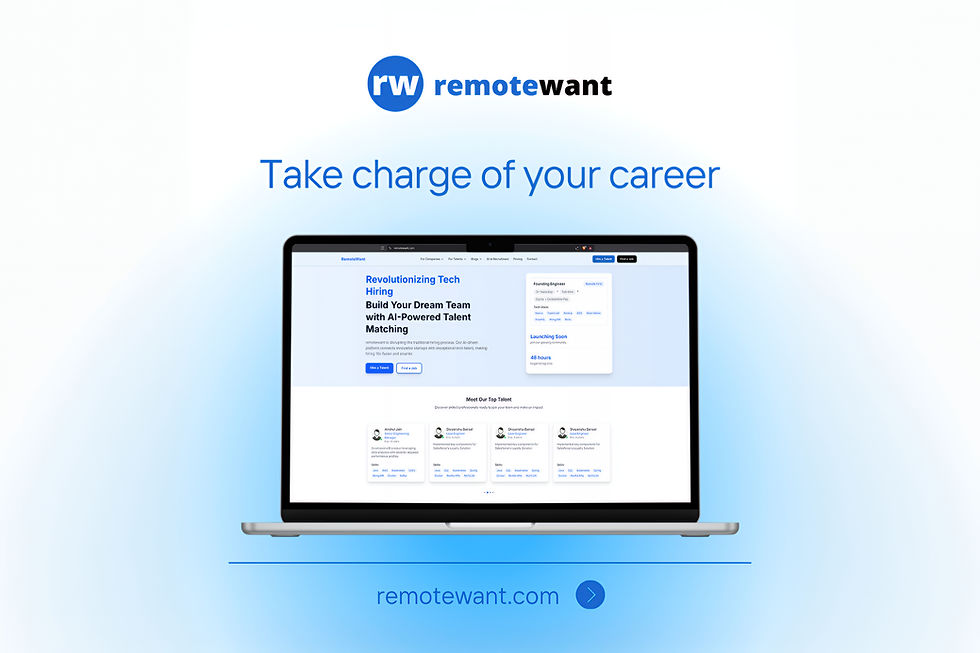
A mobile-first hiring app that streamlines job discovery, in-app applications, and recruiter communications for on-the-go candidates.
_1710x1230.png)
Thought leadership
Mobile development today is not simply about porting web features to small screens — it’s about crafting context-aware experiences that anticipate user needs, work reliably under constrained networks, and tie directly into business outcomes. Great mobile products are designed for real-world usage: intermittent connectivity, low-latency expectations, limited attention spans, and device diversity. Prioritizing performance, battery and data efficiency, and accessible UX makes apps feel faster and more trusted, which in turn drives retention and feature adoption.
Engineering mobile-first at scale requires platform discipline: cross-platform frameworks where they make sense, native modules for performance-critical paths, automated testing pipelines, and telemetry that captures meaningful user flows (not just crashes). Security, privacy, and offline data integrity must be baked into the architecture from day one. Organizations that pair product-minded mobile design with robust operational practices (CI/CD for mobile, staged rollouts, A/B testing, and analytics) consistently convert usage into measurable business results — fewer drop-offs, higher task completion rates, and lower support costs.
Product ideas
Practical, user-centered mobile product concepts that improve engagement and operational efficiency: from interview-first candidate apps to driver productivity suites and caregiver tools — each idea focuses on reliability, low friction, and measurable impact.
Design a mobile-first suite for job seekers and recruiters that centers the candidate journey around quick discovery, in-app interviews, and real-time communication. On the candidate side, the app supports short-form profiles, one-tap apply, embedded video interviews (recorded or live), and contextual micro-feedback that helps applicants improve. Recruiters get an equally mobile-optimized experience: candidate shortlists, annotated video highlights, interview scheduling with calendar sync, and inline evaluation forms — all designed to reduce time-to-hire and improve recruiter throughput.
Technically, the suite prioritizes adaptive media handling (video compression and progressive upload), low-latency signaling for live interviews, and offline-first capabilities so applicants in poor networks can still record and submit sessions. Privacy controls and PII handling are embedded, with role-based access and audit logs for recruiter interactions. Integrated analytics surface match-quality signals and interview completion rates, feeding back into the platform’s recommendation models to steadily increase shortlist relevance and hiring velocity. This product converts interviews from scheduling friction into a fast, mobile-native conversion funnel that lifts placements and candidate satisfaction simultaneously.
The Unified Merchant App Builder empowers small and medium-sized businesses to launch their own branded mobile storefronts without deep technical expertise. With no-code/low-code tools, merchants can quickly configure product catalogs, promotional workflows, and checkout processes that reflect their unique identity. Secure payment gateways, push-notification campaigns, and templated UI components are included by default, ensuring that businesses stay compliant and deliver frictionless user experiences. This reduces both time-to-market and development costs, making mobile commerce accessible to a wider range of merchants.
Beyond launch, the platform provides analytics dashboards that track conversions, engagement, and retention, giving merchants actionable insights into customer behavior. The system enforces standardized UX and compliance guidelines across all generated apps, ensuring consistent quality while allowing room for brand differentiation. With ongoing updates and central control, businesses gain the agility of custom apps with the reliability of an ecosystem-driven framework—bridging the gap between rapid deployment and long-term scalability.
The Driver Companion Suite is designed to streamline the daily workflows of professional drivers by combining navigation, telematics, safety, and fleet coordination into a single mobile solution. Offline route caching ensures uninterrupted navigation in low-connectivity zones, while telematics capture provides real-time data on driving patterns, fuel efficiency, and performance. Drivers can record photo or video evidence of incidents, complete automated checklists, and generate one-tap maintenance requests that are instantly sent to dispatch or service teams. This reduces downtime and ensures safety and compliance at scale.
By centralizing tasks into one lightweight app, the suite reduces the complexity of juggling multiple tools. Drivers benefit from performance scores and gamified progress indicators, encouraging safer and more efficient driving habits. Fleet operators, in turn, gain greater visibility into their drivers’ activities, incidents, and vehicle health—all connected to backend systems for scheduling and analytics. The result is a platform that fosters collaboration between drivers and fleet managers, ensuring operational excellence, cost reduction, and workforce empowerment.
The Caregiver & Patient Engagement App bridges the communication gap in healthcare by creating a secure, two-sided mobile experience. Caregivers can access care plans, receive real-time updates, and log their daily activities, while also sharing progress securely with families. Patients (or their proxies) receive personalized reminders, activity prompts, and telehealth check-ins that keep them engaged in their care journey. With role-based access, each stakeholder—patients, caregivers, or family members—gets an interface tailored to their needs. This fosters trust, transparency, and consistency in care delivery.
The design prioritizes accessibility, with a simple UX suitable for non-technical users and built-in privacy safeguards to maintain compliance with healthcare standards. Families gain peace of mind through secure updates, while caregivers reduce manual effort by leveraging digital tools for reporting and tracking. By enabling proactive engagement and seamless communication, the app not only improves patient outcomes but also reduces administrative overhead in healthcare operations, creating a scalable foundation for modern digital care ecosystems.
The Offline-First Sync Engine addresses one of the most critical challenges in mobile development—ensuring seamless functionality when users face inconsistent or limited connectivity. The SDK and backend service provide conflict-free data synchronization, efficient delta-sync to minimize bandwidth usage, and resumable uploads for large files such as media or telemetry data. Developers can integrate this engine directly into their mobile apps, giving users the confidence to continue working offline without fear of data loss or duplication when connectivity resumes.
By abstracting away the complexity of sync management, the engine enables developers to focus on building user-facing features while ensuring robust reliability under real-world conditions. Automatic background synchronization ensures a smooth experience across devices, while consistency checks safeguard data integrity. This not only improves usability for end-users in remote or bandwidth-constrained environments but also reduces engineering overhead for organizations, allowing them to ship offline-capable apps faster and with greater reliability.
Solution ideas
Actionable mobile engineering patterns and platform solutions that reduce release risk, improve user reliability, and speed up mobile product delivery — described as implementable blueprints you can adopt directly.
Solution Idea | Detailed Description |
|---|---|
Accessibility & Inclusive UX Checklist | Enforce accessibility testing, dynamic type/scaling, high-contrast themes, and simplified flows for low-literacy users; includes test cases in CI to prevent regressions. |
Battery & Data Efficiency Guardrails | Implement background-job budgets, adaptive polling, and batching strategies to reduce battery drain and data usage; use heuristics to pause non-critical sync on low battery or roaming. |
Mobile Instrumentation & Real-User Monitoring (RUM) | Instrument performance (startup, screen render times, network latency), UX funnels, and in-app errors; integrate with session replay and analytics to convert signals into prioritized fixes and product experiments. |
Cross-Platform Core + Native Bridge Pattern | Use an efficient cross-platform framework (React Native / Flutter) for UI/UX parity and developer productivity, while isolating performance-critical modules (video codecs, mapping, heavy telemetry) as native bridges. This balances speed-to-market with native performance where it matters. |
Mobile CI/CD & App Quality Pipeline | Automate build-signing, device farms for automated UI tests, beta distribution, crash analytics integration, and staged rollouts (canary, phased). Ensures consistent quality across OS versions and device profiles and reduces regression risk. |
Offline-First Data Sync & Conflict Resolution | SDK + backend pattern supporting local operations queue, operational transforms or CRDTs for conflict resolution, resumable uploads for media, and prioritized sync to minimize bandwidth and preserve user intent. Critical for remote areas and field operations. |
Secure Mobile Auth & Device Trust | Implement token-based auth with short-lived tokens, device attestation, biometrics support, and centralized device management for session revocation. Enforce encryption for local caches, secure storage, and role-based data access. |
Push & Engagement Platform with Smart Triggers | Event-driven push notification system that supports segmented campaigns, deep links, actionable notifications, and throttling to avoid fatigue. Integrates with analytics to measure lift and optimize timing/content. |