
Quality Assurance
Quality Assurance is the backbone of reliable, high-performing digital products. It’s more than just testing — it’s a commitment to delivering flawless user experiences, secure systems, and bug-free performance. Our QA process ensures every product we build is rigorously tested for functionality, usability, security, performance, and scalability.
Trust & Reliability Statistics
88%
of users abandon apps or websites due to bugs or poor performance.
90%
Businesses that invest in comprehensive QA processes reduce post-release defects by up to 90%.
76%
of customers say that performance and reliability are the top factors that impact their trust in a digital product.
6x
Fixing a bug after release is 6x more expensive than identifying and fixing it during development or QA stages.
Why Quality Assurance Matters
In today’s fast-paced digital world, users expect flawless experiences — and a single bug can impact trust, reputation, and revenue. Quality Assurance isn’t just about testing; it’s about safeguarding your product’s reliability, security, and performance. Just as data-driven insights drive smarter decisions, rigorous QA ensures that every feature works as intended, every time.
Speed Advantage

30–50%
Companies that adopt automated testing alongside manual QA accelerate release cycles by 30–50%.
Case studies and proof
Quality Assurance is the safety net that turns features into reliable experiences. Our QA practice covers functional correctness, performance at scale, hardware/software integration, and regulatory/compliance testing—ensuring products behave as expected in production and under edge conditions. These case studies show how systematic testing, observability-driven validation, and automation reduce defects, shorten incident resolution, and raise user confidence across hardware, web, mobile, and backend systems.
_1344x768_2688x1536.png)
Planto
Rigorous test suites and labeled-ground-truth validation ensure CV/DNA detection models meet accuracy targets before each release.

PaisaOnClick
Transactional test harnesses and compliance scenarios validate partner flows, audit trails, and edge-case fee calculations.
_2324x1700.png)
Jujubi
High-concurrency load tests and failure-mode drills validate checkout flows and payment integrations across peak traffic windows.

Seedvision
Field-grade test harnesses validate device capture, sync, and cloud scoring workflows to prevent batch rejections and field errors.
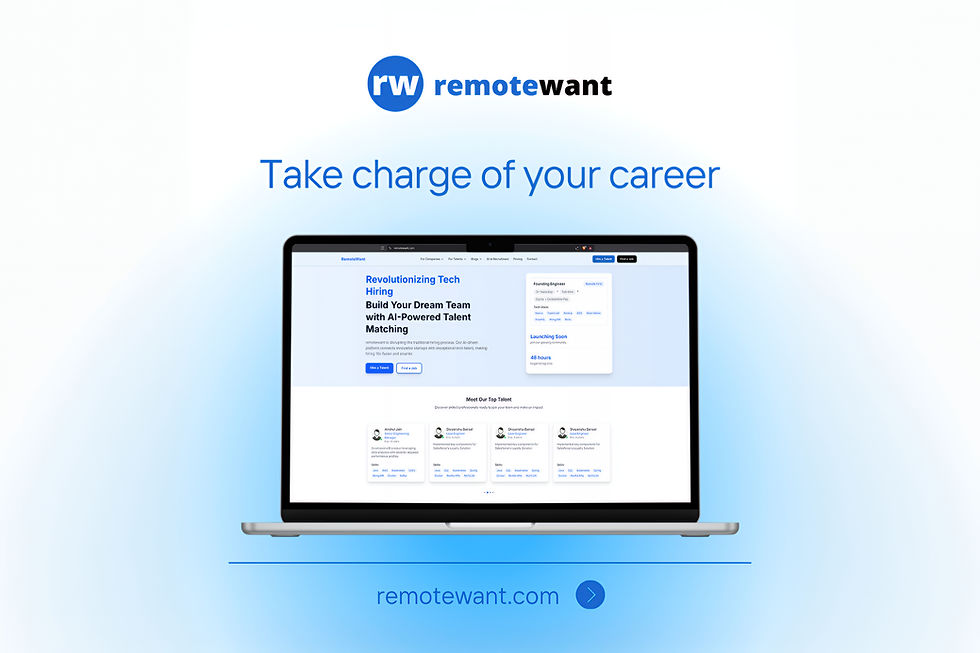
Remotewant
Functional test automation and cross-device compatibility suites keep job discovery and apply flows resilient across browsers and mobiles.
_1710x1230.png)
Bubblegum
UX-focused regression and stress tests preserve page speed, search latency, and resume upload reliability under heavy traffic.
_2688x1536.png)
Fleetnext
End-to-end telemetry tests and synthetic-drive scenarios ensure streams, ingest pipelines, and alerting rules remain accurate under load.
_2688x1536.png)
Thought leadership
Quality assurance is no longer a final gate; it’s an integrated practice that must be embedded across the product lifecycle. Shift-left testing—bringing automated unit, integration, and contract tests into CI—reduces the feedback loop between defect discovery and developer resolution. Complement that with observability-driven validation: use RUM, synthetic monitoring, and pipeline assertions to detect regressions that tests miss. For systems combining software and hardware (agritech, IoT), QA must include device-in-the-loop validation, end-to-end data provenance checks, and reproducible test fixtures that mirror field conditions.
At scale, QA must be outcome-oriented: measure business-facing indicators (error budgets, checkout success rates, model accuracy at decision thresholds) and tie them to release gating. Automation is key for repeatability, but human-in-the-loop checkpoints remain essential for high-risk domains (fraud, finance, clinical/health). Finally, QA ownership should be cross-functional—engineers, product managers, data scientists, and SREs co-own test plans, SLAs, and incident playbooks. This alignment turns QA from a bottleneck into an engine for predictable, safe innovation.
Product ideas
Our Quality Assurance product ideas convert testing best practices into reusable capabilities: automated test farms, device-in-the-loop harnesses, performance labs, synthetic-data generators, and compliance test suites that teams can adopt quickly. Each product is designed to reduce manual effort, raise confidence, and make release gating measurable and repeatable.
An integrated QA Automation Platform bundles test orchestration, environment provisioning, and reporting into a single product for teams to run functional, integration, regression, and acceptance tests in CI/CD. It provides language-agnostic runners, test templating, and a smart scheduler that parallelizes tests across cloud device farms and headless browser pools. The platform ties tests to release artifacts and feature flags, making it easy to run full-suite validations on PRs, pre-production branches, and canary rollouts. Test results are unified into an audit-ready report that links failures to code changes, telemetry spikes, and user-impact KPIs.
Operational features include flaky-test detection and quarantine, auto-retry strategies, test-slicing based on historical failure patterns, and CI budget optimization. The platform also exposes dashboards for test coverage, pass/fail trends, mean time to detect regressions, and release readiness gates. For regulated products, it can generate exportable compliance evidence (test artifacts, execution timestamps, and signed results). By treating QA as a product, teams gain consistent, reliable gating and dramatically reduced manual test maintenance overhead.
The Hardware-Integrated Test Harness is a comprehensive solution designed to validate field devices in a controlled, repeatable manner. It combines automated firmware flashing, calibration routines, and synthetic sample generation to replicate real-world inputs such as camera captures, sensor readings, or telemetry sequences. Controlled rigs simulate environmental conditions—lighting, vibration, network fluctuations—to ensure that devices behave consistently before deployment. End-to-end verification links the device, mobile or web applications, and cloud analytics pipelines, confirming that the entire workflow—from data capture to processing—is robust and reliable.
Beyond functional validation, the harness includes automation for regression testing across firmware versions and device models. Test results are collected, versioned, and linked to release artifacts to provide audit-ready evidence for compliance or certification. By enabling repeatable device QA, the harness reduces field failures, accelerates pilot-to-production timelines, and provides a reliable framework for scaling hardware-dependent products like those in agritech or IoT-heavy domains.
The Performance & Load Lab is a fully-managed environment for stress-testing software and telemetry systems under realistic load conditions. It provides pre-configured scenario templates for high-concurrency events such as checkout spikes, search storms, or telemetry surges from distributed devices. Distributed load generators simulate users across multiple regions and network conditions, including low bandwidth and high-latency scenarios, allowing teams to validate system SLOs and operational thresholds. By replicating edge and cloud workloads together, the lab ensures that both local device processing and backend services maintain reliability and performance under peak demand.
Additionally, the lab integrates observability tooling, real-time dashboards, and automated alerting to surface performance bottlenecks, resource contention, and potential failure points. It allows iterative testing and continuous optimization of infrastructure, application, and telemetry pipelines. By providing a repeatable framework for performance validation, the lab ensures system resilience, guides capacity planning, and reduces the risk of user-facing issues in production at scale.
The Synthetic Data & Labeling Pipeline generates realistic, configurable datasets for testing ML models, software workflows, and system pipelines without exposing real user data. It produces images, telemetry sequences, documents, and other domain-specific artifacts with configurable distributions, noise patterns, and edge-case scenarios. Automated labeling ensures that every generated dataset includes accurate ground-truth annotations, enabling precise validation of models, detection systems, or data-processing workflows.
This pipeline also integrates with QA automation frameworks, allowing synthetic datasets to feed into regression tests, validation pipelines, and performance simulations. By providing repeatable, scalable test data, it mitigates reliance on sensitive production data, accelerates model evaluation, and allows teams to probe rare or extreme conditions that would be difficult to capture in real-world datasets. This ensures that systems are robust, reliable, and resilient before reaching production.
Solution ideas
Solution Ideas are concrete, copy-ready testing patterns and operational playbooks you can adopt immediately: from CI gating policies and contract tests to device QA recipes, chaos testing, and compliance automation. Each solution maps to tooling, KPIs, and rollout guidance so you can implement it predictably.
Solution Idea | Detailed Description |
|---|---|
Cross-Browser & Device Matrix Automation | Automated UI tests across browser/os matrix with visual regression, accessibility assertions, and performance budgets enforced in CI. KPI: UI regressions prevented, accessibility pass rate. |
End-to-End Payment & Compliance Scenarios | Full-path transactional tests including 3DS, chargebacks, fee calculations, and reporting exports; integrates with partner sandboxes. KPI: transaction success rate ↑, audit readiness. |
Synthetic Data Generation & Replay | Generate labeled synthetic artifacts and replay historical streams against test pipelines to validate ML inference and downstream processing without using PII. KPI: edge-case coverage ↑, model regression catch rate ↑. |
Performance & Chaos Playbook | Load profiles, chaos experiments (network partition, delayed queues, DB failover) and observability checks; includes rollback triggers and runbooks. KPI: MTTR ↓, resilience score ↑. |
Device-in-the-Loop Testbeds | Standardized device racks + automation scripts for flashing, calibration, and repeatable capture tests (images, telemetry). Integrates with cloud CI to run hardware tests on every build. KPI: field-failure rate ↓, deploy confidence ↑. |
CI Gate: Contract + Integration Tests | Enforce API contracts (consumer-driven tests) and run integration suites on PRs; block merges when contract or integration tests fail. KPI: contract violation rate → 0; reduced post-release API regressions. |