
Agent Development
Agent development focuses on building intelligent systems that can autonomously understand, reason, and execute tasks on behalf of users or organizations. These AI‑powered agents leverage natural language processing, machine learning, and automation to interact with data, tools, and people in real time — driving faster, smarter, and more efficient outcomes.
Agenda
68%
of organizations report that AI agents have improved operational efficiency across functions.
55%
of enterprise tasks are expected to be handled by AI agents within the next 2 years, reducing manual workloads.
3-5X
increase in productivity for businesses adopting AI-powered agents for automation, customer service, and internal processes.
$12B
is the estimated collective monthly investment by global companies in AI agent platforms, tools, and development infrastructure.
Why Agent Development Matters
AI agent development is transforming how businesses operate. By creating autonomous systems that can understand, learn, and act on behalf of humans, organizations can:
-
Automate repetitive, time‑intensive tasks
-
Enhance decision‑making with real‑time, data‑driven insights
-
Deliver personalized customer and employee experiences at scale
-
Accelerate innovation across products, services, and operations
This strategic integration of AI agents enables companies to operate more efficiently, respond faster to market changes, and unlock entirely new business opportunities.
Deployment Barrier
43%
of organizations cite a lack of AI expertise and training as a top barrier to successfully deploying and scaling AI-powered agents.

Case studies and proof — Agent Development
Agent Development focuses on building intelligent, autonomous systems that can reason, act, and interact in real time. Below are curated case studies that demonstrate how agent-like platforms have delivered measurable value in job matching, remote collaboration, and digital community engagement.
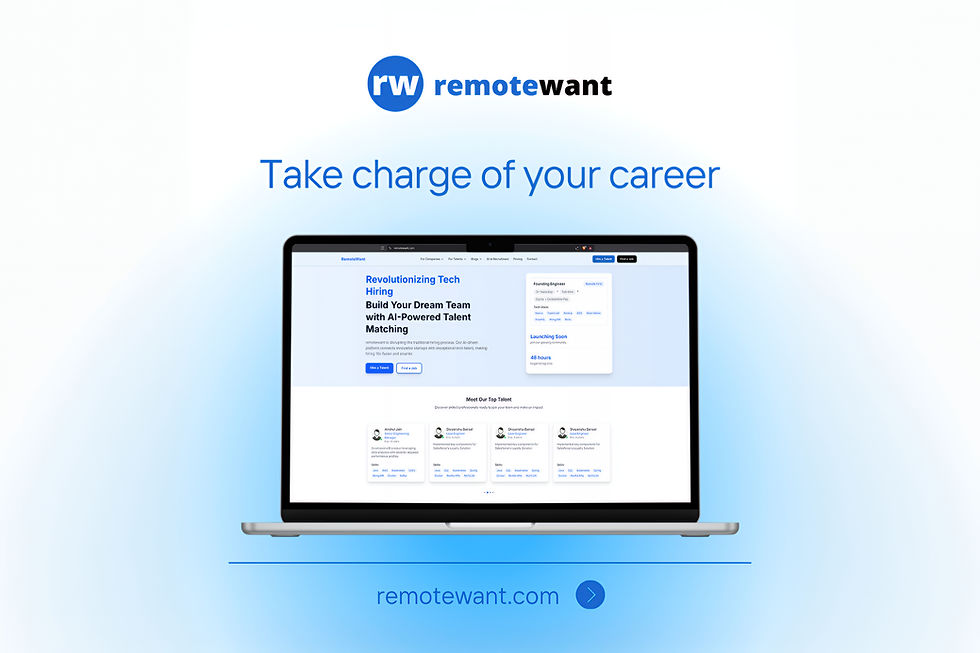
Remotewant
A real-time platform for remote jobs, connecting seekers and employers with organized updates and autonomous matching mechanisms.
_1710x1230.png)
Bubblegum
Public job portal with 100K+ users, integrating automation for recruiter–candidate interactions and smart resume handling.
_2688x1536.png)
Thought leadership
Agents represent the shift from “tools” to “collaborators.” Unlike static automation, AI agents operate as adaptive systems that reason over context, execute multi-step tasks, and interact across interfaces. The design challenge is not just technical but also behavioral: ensuring that agents act transparently, align with user intent, and escalate appropriately when confidence is low.
The future of agents lies in ecosystem integration — embedding them across workflows so they can plan, decide, and act autonomously while coordinating with humans. Organizations that succeed will treat agents as part of their operating model, not just an interface layer. That means training agents with domain-specific goals, providing observability into their decisions, and continuously aligning outputs to measurable KPIs like productivity uplift, time saved, or decision accuracy.
Product ideas
Explore innovative concepts that showcase how intelligent agents can transform business processes and user experiences. These product ideas demonstrate how AI-driven agents can autonomously coordinate tasks, personalize interactions, and adapt to real-time context — creating scalable systems that work alongside humans as trusted digital collaborators.
The TaskFlow Orchestrator Agent is designed to coordinate complex, multi-step workflows across a variety of SaaS tools, including email, CRM systems, project management software, and reporting platforms. It reasons about task dependencies, executes actions in the correct sequence, and intelligently flags exceptions for human review when conflicts or errors arise. By learning from historical task patterns, it continuously refines its execution logic to optimize efficiency and reduce bottlenecks.
Over time, the TaskFlow Orchestrator becomes a proactive collaborator rather than just a reactive tool. It predicts potential workflow delays, recommends prioritization strategies, and adapts dynamically to changes in workload or resource availability. Organizations implementing this agent can expect significant reductions in cycle time for repetitive business processes, measurable productivity improvements, and a streamlined approach to cross-departmental coordination in sales, HR, IT, and operations.
The Adaptive Recruiter Agent automates key hiring workflows by intelligently matching candidates to open roles, screening resumes, and scheduling interviews. Drawing inspiration from platforms like Remotewant and Bubblegum, it integrates seamlessly with ATS systems and continuously learns organizational hiring preferences. Its AI-driven scoring models evaluate candidates against historical success patterns, enabling recruiters to focus on high-potential matches while the agent handles repetitive screening tasks.
Beyond time savings, the agent actively improves the quality-of-hire by refining its matching heuristics through ongoing feedback loops. As recruiters provide evaluations of candidate fit, the system adjusts scoring models, increasing predictive accuracy for future hiring cycles. By combining automation with human oversight, this agent balances speed, precision, and fairness, helping organizations fill roles faster while maintaining high recruitment standards and candidate experience.
The Community Engagement Agent is built to enhance participation and interaction on digital platforms like Arttora. It proactively recommends relevant collaborations, highlights content that aligns with user interests, and sends engagement prompts at optimal times. By analyzing activity patterns, social networks, and user preferences, the agent ensures that interactions are meaningful and aligned with both individual and community goals.
This agent not only boosts engagement metrics but also strengthens network cohesion and long-term platform loyalty. By dynamically balancing personalization with broader community objectives, it fosters a collaborative ecosystem where users are motivated to contribute and interact. Over time, the system adapts to evolving user behavior, creating a continuously improving experience that supports growth, retention, and value creation for both the platform and its members.
Solution ideas
Explore proven implementation patterns that translate vision into execution. These solution frameworks outline the technology stack, operational approach, and key performance outcomes needed to deliver measurable business impact. They serve as practical blueprints for teams to reduce risk, accelerate delivery, and scale AI responsibly.
Solution Idea | Detailed Description |
|---|---|
Safety-Aware Agent Governance | Stack: decision log store + confidence scoring module + human escalation queue + policy enforcement layer.
KPI Targets: override/escalation rate <5%; compliance incidents = 0.
Why it Wins: Builds trust by giving humans visibility and control over agent decisions, critical for enterprise adoption. |
Community Growth Agent | Stack: user graph database + content recommender model (collaborative filtering + embeddings) + engagement trigger engine (notifications, nudges) + explainability dashboard.
KPI Targets: DAU/MAU ratio +15%; average session time +20%.
Why it Wins: Keeps users returning by fostering relevant, organic interactions rather than generic feeds. |
Autonomous Recruiting Agent | Stack: ATS API integration + resume parsing (NLP) + candidate scoring model (ML) + calendar sync + human-review fallback.
KPI Targets: recruiter hours saved 50%; shortlist accuracy uplift 20%.
Why it Wins: Cuts hiring friction by automating low-value steps while preserving human oversight for critical decisions. |
Multi-Step Workflow Agent (Ops Automation) | Stack: orchestration layer (LangChain/AutoGPT) + connectors to SaaS APIs (Slack, Salesforce, Jira) + reasoning engine (LLM + rules) + monitoring dashboard.
KPI Targets: cycle time reduction −40%; error rate <3%.
Why it Wins: Replaces brittle scripts with adaptive reasoning, scaling automation across diverse workflows. |