
Make your own likable, dependable development team
Make your own likable, dependable development team that feels like an extension of your business. Build a team of skilled engineers, designers, and product experts who align with your vision, culture, and goals. Whether you need full-stack developers, mobile app specialists, or AI engineers, our model lets you assemble a reliable team that delivers with quality, transparency, and accountability. Scale quickly, collaborate seamlessly, and innovate faster — all while maintaining control and flexibility over your project outcomes.
Development Talent Market Insights
78%
of businesses say access to the right development talent is a top challenge in scaling their products and services.
35%
Companies that build dedicated development teams report a 35% faster time-to-market compared to traditional hiring models.
59%
of startups and enterprises rely on remote or offshore development teams to access specialized skills and reduce costs.
82%
of companies say dedicated development teams improve collaboration, flexibility, and long-term product quality.
Why Building Your Own Dependable Development Team Matters
In a fast-paced digital world, having a flexible, dependable development team is essential to drive growth, innovation, and scalability. Building your own dedicated team allows businesses to tap into global talent, scale resources quickly, and maintain full control over their projects — without the overhead of traditional hiring.

Strategic Leverage
71%
of CTOs report that having a dependable external development team helps them focus more on strategy and innovation rather than operational tasks.
Case studies and proof
Building a dependable, effective development team is both a people problem and an engineering problem — the best outcomes come from combining the right skills, predictable delivery processes, and a culture that’s aligned to product goals. Our engagements with product teams across e-commerce, recruitment, logistics, insurance, marketing, and creative platforms demonstrate how dedicated cross-functional teams (product manager, engineers, designers, QA, SRE) accelerate time-to-value, reduce operational friction, and create long-term product ownership. Each case highlights measurable outcomes: faster releases, lower defect rates, higher UX adoption, and clearer accountability.
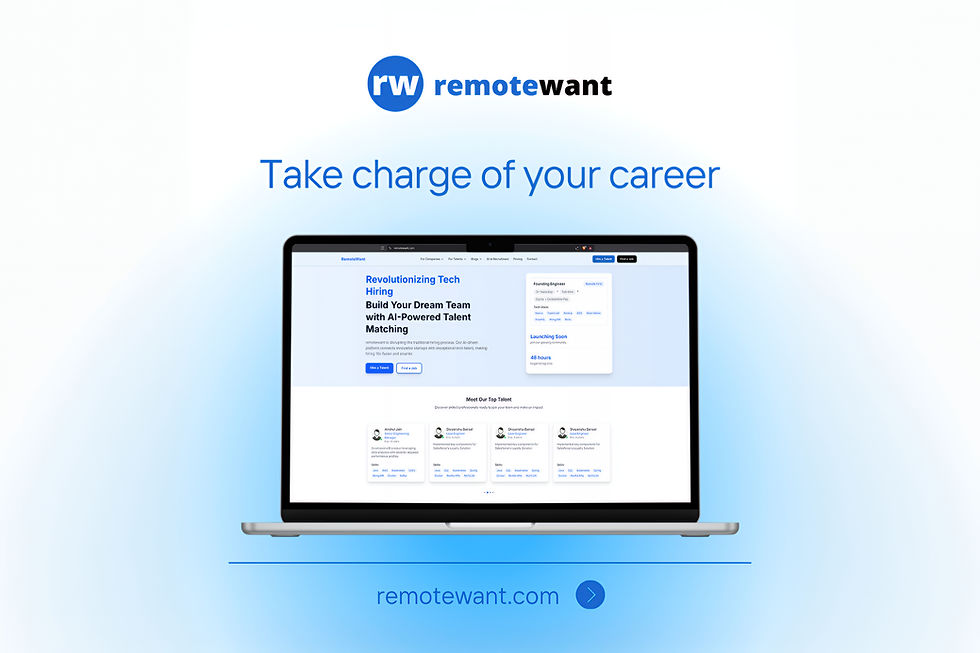
Remotewant
A dedicated team improved candidate matching features and reduced lead time for new hiring workflows via focused backlog ownership.
_1710x1230.png)
Bubblegum
A stable ops-centered team reduced incidents and improved page performance for 100k+ monthly users through SRE practices and observability.
_2688x1536.png)
Fleetnext
A mobile+backend squad delivered driver app updates and telemetry reliability improvements with clear SLAs and on-call rotations.
_2688x1536.png)
Insuranext
Cross-discipline engineers, product, and QA sped up claims automation rollouts while hardening security and audit trails.
_2324x1700.png)
Jujubi
A merchant-aligned cross-functional team delivered iterative storefront improvements and payment integrations with predictable two-week sprints.
_2560x1600.png)
1000X
A growth-oriented team rapidly iterated templates and automation, increasing campaign velocity and conversion experiments per week.
_2688x1536.png)
Thought leadership
Creating a likable, dependable development team is an organizational capability — not just a hiring checklist. Dependability comes from predictable processes (clear definition of done, SLAs, backlog hygiene), psychological safety that encourages responsible risk-taking, and product ownership where teams are empowered to deliver outcomes rather than just tickets. A likable team is one that communicates transparently, shows steady progress, and values craftsmanship; this makes it easier for stakeholders to trust that work will ship on time and behave in production. The combination of cultural practices and engineering discipline is what converts individual contributors into a reliable delivery machine.
Practically, this means shifting from task assignment to team ownership: product managers, engineers, designers, QA, and ops co-own metrics (lead time, change failure rate, MTTR, user adoption). Invest in rituals that reduce friction — weekly demo & feedback loops, lightweight architectural guardrails, and an SRE contract for production incidents. Measure and iterate on team health (cycle time, burnout signals, ramp-up time) as much as you measure product KPIs. In short: treat team formation and team ops as product work that requires continuous investment and instrumentation.
Product ideas
Product ideas here focus on tooling, playbooks, and services that make it easy to create, run, and scale dependable cross-functional teams — from hiring/onboarding accelerators to operational dashboards and people-ops automation that reduce friction and raise predictability.
The Embedded Dedicated Team Model is a repeatable offering that places a small, cross-functional squad inside a client’s product org as a long-running, SLA-driven unit. Each squad includes a product lead, 2–4 engineers (mix of frontend, backend, mobile), a designer, QA/test engineer, and a part-time SRE or ops engineer. The engagement begins with a structured intake: a 4-week onboarding sprint that establishes goals, delivery cadence, code standards, observability hooks, and a minimal living architecture. Clear success metrics (lead time, user activation lift, uptime targets) are agreed upfront and captured on a dashboard. The squad owns an outcome backlog and is empowered to prioritize technical debt, experiments, and feature work within the agreed product scope. This ownership reduces handoffs, speeds decisions, and builds institutional knowledge inside the client’s domain.
Operationally, the model enforces disciplined practices: two-week sprints with continuous delivery pipelines, feature flags for safe rollouts, shared on-call rotations tied to SLOs, and a biweekly stakeholder review that includes demo, KPIs, and roadmap adjustments. We pair this with a people plan: predictable ramp-up (30/60/90 day milestones), continuous skills uplift (mentorship, learning credits), and a retention program with career tracks. Over months the embedded squad becomes a trusted extension of the client — likable because it collaborates well, dependable because it owns results, and repeatable because the model codifies onboarding, tooling, and governance into a scalable service.
The Culture & Onboarding Toolkit is a comprehensive playbook designed to accelerate new-hire productivity while instilling team values and engineering standards. It codifies cultural norms, communication patterns, code conventions, and first-90-day deliverables into a repeatable framework. The toolkit includes structured checklists, mentorship rotations, pair-programming schedules, and onboarding mini-projects, enabling new team members to learn by doing while gradually integrating into the squad. By combining these elements, organizations reduce uncertainty, avoid ramp-up friction, and ensure consistent understanding of both technical and cultural expectations across the team.
Operationally, the toolkit integrates with automated workflows, tracking completion of onboarding tasks and providing real-time feedback to managers and mentors. Teams can customize learning paths based on roles, skill levels, or project assignments. The toolkit also supports collaborative learning, encouraging early contributions while maintaining oversight through structured mini-projects. Over time, it becomes a living resource that reduces attrition, improves engagement, and ensures that all new hires adhere to a predictable, high-quality standard of work.
The Skill Gap Radar & L&D Pipeline is a people-ops platform that continuously evaluates the capabilities of a team against roadmap requirements, highlighting areas where skills are missing or need reinforcement. It aggregates self-assessments, manager inputs, and project performance data to build a skill inventory and visual radar map. This helps organizations quickly identify knowledge gaps across engineering, design, QA, and product roles, enabling strategic planning for hiring, training, or re-skilling.
Beyond diagnostics, the platform schedules targeted learning interventions such as curated training courses, micro-reskilling sprints, and mentorship pairings. It provides actionable recommendations: whether to upskill current employees or hire for missing competencies, and tracks learning progress to ensure the team evolves alongside product needs. By combining visibility, predictive planning, and structured learning, the solution ensures teams remain agile, capable, and aligned with organizational goals while reducing the risk of project delays due to skill shortages.
The Delivery Ops & Tooling Stack provides a pre-configured, production-ready suite of CI/CD pipelines, code quality checks, linting rules, code ownership policies, observability presets, and release dashboards. By giving teams a fully managed infrastructure, it eliminates the need to reinvent core delivery tools for each new squad or project. This enables developers to focus on writing and shipping code rather than building deployment pipelines or monitoring systems from scratch, reducing time-to-market and increasing reliability.
The stack also incorporates automation for testing, deployment, and rollback, along with standardized monitoring and alerting for early detection of issues. By integrating these capabilities into a single, cohesive framework, teams achieve predictable release cycles, consistent code quality, and rapid detection of regressions or incidents. Operational dashboards provide full visibility to engineering leadership, helping them monitor velocity, coverage, and error rates across multiple squads or projects while maintaining centralized governance and compliance.
The Transparent Roadmap & Reporting Dashboard is a single-pane-of-glass view for stakeholders, combining delivery status, business KPIs, risk indicators, and team velocity metrics. It turns abstract project plans into real-time, actionable insights that make product progress and team health visible to all relevant parties. By tracking release timelines, feature completion, and risk flags, it fosters trust and accountability between cross-functional teams and management.
In addition to visibility, the dashboard supports proactive decision-making by highlighting potential bottlenecks, resource constraints, or dependency conflicts. Customizable visualizations allow teams to monitor both tactical delivery metrics (lead time, deployment frequency) and strategic outcomes (customer adoption, business impact). By providing transparent, up-to-date reporting, it reduces the need for status meetings, improves cross-team alignment, and creates a culture of predictability, where stakeholders can trust the data and teams can focus on delivery.
Solution ideas
Solution ideas are practical blueprints that implement the product concepts: they include team composition templates, onboarding sprints, delivery pipelines, SRE contracts, performance metrics, and people-ops automation patterns — all designed to make team creation and scale low-risk and repeatable.
Solution Idea | Detailed Description |
|---|---|
Transparent Reporting Dashboard | A read-only stakeholder dashboard showing roadmap items, health indicators (deploy frequency, MTTR), and business impact metrics to align expectations and reduce status calls. |
Partnered Hiring & Bench Model | On-demand access to vetted engineers and designers who can join squads quickly; includes short-term bench placements to absorb churn or accelerate sprints without long hiring cycles. |
Cross-Functional Playbooks (Design → Dev → QA) | Practical recipes for how work flows across roles: design handoffs, interactive prototypes, acceptance criteria, automated tests, and release checklists — reducing rework and improving product polish. |
People Analytics & Retention Engine | Tracks engagement, burnout indicators, ramp-time, and performance trends. Suggests interventions (mentoring, role changes, compensation reviews) and automates retention workflows to keep core team members long term. |
SRE & On-Call Contract | A standard SRE engagement model defining SLOs, on-call rotations, incident escalation paths, and runbooks. Ties reliability obligations to team capacity and provides shared tooling for alerting, postmortems, and root-cause tracking. |
Delivery Ops (CI/CD + Quality Gates) | A plug-and-play delivery stack: build/test pipelines, security checks, feature-flag integration, canary releases, and automated rollback policies. Includes templates and runbooks so every team inherits mature delivery practices immediately. |
30/60/90 Onboarding Sprint Kit | A timeboxed onboarding plan including technical setup, domain immersion tasks, shadowing, and an initial deliverable. Includes checklist automation (access, repos, dashboards), mentoring pairings, and first-release plan so new teams contribute in weeks, not months. |
Team Composition Templates | Pre-defined role mixes (e.g., Growth Squad, Core Product Squad, Platform Squad) with recommended headcount, skill ratios, ramp expectations, and a sample RACI. Helps quickly staff and budget new squads with the right capability balance. |