
Hybrid App Development
Hybrid app development empowers businesses to build applications that work seamlessly across multiple platforms—iOS, Android, and the web—using a single codebase. This approach combines the flexibility of web technologies with the performance of native apps, delivering faster development cycles and cost efficiency. With hybrid apps, businesses can reach a wider audience, maintain consistent user experiences, and simplify updates and maintenance. It’s the perfect balance between speed, scalability, and functionality—ideal for startups and enterprises alike looking to accelerate their digital presence.
Market Signals for Hybrid Growth
74%
of top global companies use hybrid or cross-platform app development to reduce costs and reach wider audiences.
87%
of developers say hybrid frameworks like React Native, Flutter, and Ionic significantly accelerate deployment speed.
17.5%
The hybrid app development market is expected to grow at a CAGR of 17.5% from 2024 to 2030.
60%
of startups and SMEs prefer hybrid app development to quickly validate products and launch MVPs across iOS and Android simultaneously.
Why Hybrid App Development Matters
In a world where users expect fast, seamless experiences across multiple devices, businesses can’t afford to develop apps for each platform separately. Hybrid app development bridges that gap by enabling a single codebase to power apps on iOS, Android, and the web. This approach drastically reduces development time and costs, speeds up deployment, and ensures consistency in user experience. Hybrid apps empower companies to scale faster, iterate quickly, and reach wider audiences without compromising performance or quality.
Code Reusability Insight
80–90%
Apps built using hybrid technologies experience 80–90% code reusability across platforms, saving time on updates and scaling.
Case studies and proof
Hybrid app development enables teams to deliver consistent, high-quality mobile experiences across iOS, Android, and web from a single codebase—accelerating time-to-market while controlling cost. Our hybrid engagements show how cross-platform strategies preserve UX fidelity, enable rapid feature parity across channels, and simplify maintenance for high-velocity products. The case studies below demonstrate measurable outcomes: faster release cadence, lower engineering overhead, consistent UX across platforms, and the ability to ship new experiences (push, payments, offline) without running parallel native stacks.
_1710x1230.png)
Bubblegum
Lightweight hybrid builds with progressive loading and offline fallbacks to support 100k+ monthly active users.
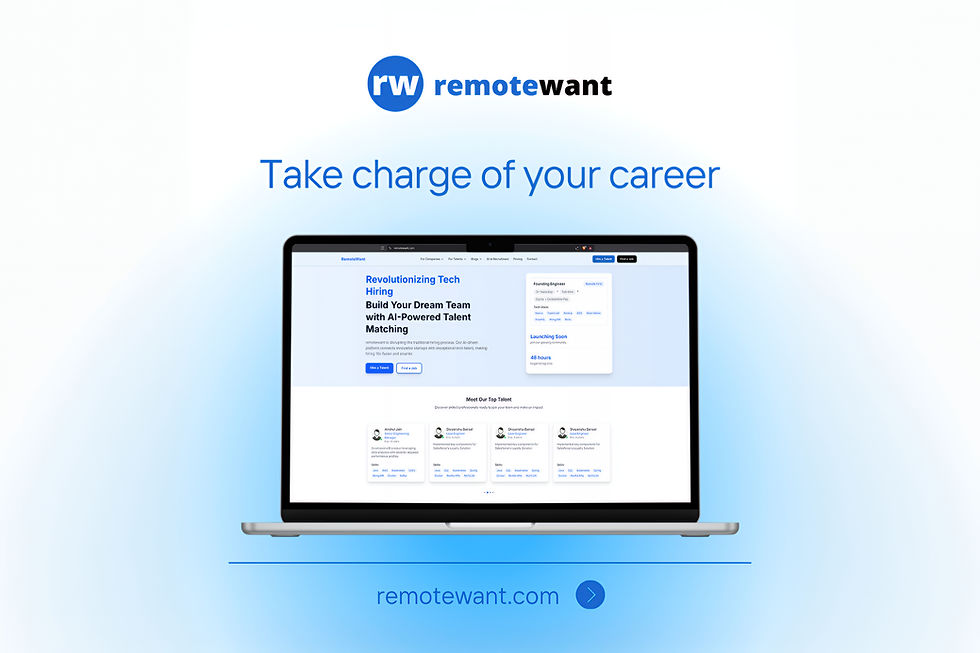
Remotewant
Hybrid client that enables rapid iteration of candidate and recruiter experiences while preserving native performance where it matters.
_2324x1700.png)
Jujubi
Single-codebase storefronts that deliver consistent branding and fast feature parity across iOS, Android, and web.
_2560x1600.png)
1000X
Unified app for campaign creation and monitoring that reduces release cycles and keeps interfaces consistent across devices.
_2688x1536.png)
Thought leadership
Hybrid development is no longer a compromise—it’s a strategic choice when teams need fast iteration, broad reach, and maintainable code without sacrificing user experience. Modern cross-platform frameworks (Flutter, React Native, Capacitor) enable high-performance UI, near-native interactions, and direct access to device features via well-managed native bridges. The leadership decision is to evaluate where platform parity delivers measurable business value (faster launches, unified metrics, reduced overhead) and where native code is justified (camera pipelines, highly interactive animations, platform-specific hardware access). Choose hybrid when the product benefits from rapid cross-platform feature parity, consistent UX, and a single engineering velocity metric.
Operational excellence for hybrid apps requires product-minded engineering practices: a clear native-bridge strategy, performance budgets, and an engineering guardrail that prevents “write-once, fix-everywhere” drift. Treat the hybrid codebase as the canonical product source with rigorous CI/CD, cross-platform visual regression tests, and device farm coverage for critical flows. Architect the app as a lightweight shell plus isolated native modules for performance-critical paths; monitor real-user metrics and iterate on hotspots. When done well, hybrid apps combine the economics of a single codebase with the quality of native experiences, enabling teams to experiment faster and deliver consistent brand experiences at scale.
Product ideas
Product ideas focus on accelerating hybrid app delivery, preserving UX quality, and making native integrations repeatable—tools and patterns that let teams ship cross-platform apps quickly without sacrificing performance, observability, or maintainability.
The Hybrid App Shell + Native Bridge Kit is an opinionated, production-ready starter product that packages a cross-platform UI shell (React Native or Flutter) with a managed native-bridge interface for performance-critical features. The shell includes navigation, theming, permissions handling, analytics plumbing, feature-flag hooks, and a set of pre-integrated native modules (camera capture, background geofencing, advanced audio/video). The bridge layer exposes a small, versioned API surface so teams implement native capabilities in isolated modules while the majority of the app stays in the shared codebase. This reduces coupling, simplifies testing, and provides a predictable upgrade path when underlying frameworks evolve.
Operationally, the product includes CI templates for building multi-OS artifacts, automated signing pipelines, and a release orchestration dashboard for phased rollouts and feature flag targeting. It also provides performance benchmarks and a set of guarded native module patterns (threading, memory handling, and resumable uploads) to prevent the common pitfalls of hybrid builds. By packaging best practices, this kit accelerates new projects, reduces engineering debt, and gives product teams confidence that cross-platform velocity won’t degrade user experience on lower-end devices.
The Offline-First Sync & Storage Module ensures hybrid apps remain functional and reliable even in low or no network environments. It provides conflict-free replicated data types (CRDTs) and operational transforms that guarantee data integrity when multiple devices or users make edits offline. The module supports delta-sync to minimize payload sizes, resumable uploads for large media files, and intelligent prioritization of sync tasks to ensure critical data flows (such as location updates or patient logs) are never blocked by non-essential sync jobs. This approach makes apps usable for field technicians, logistics operators, and healthcare workers who frequently face unstable connectivity.
Beyond the technical implementation, this module empowers businesses to expand into underserved regions where connectivity is a bottleneck. By decoupling user experience from network dependency, the module reduces frustration and builds trust with end-users who can reliably capture, edit, and store data without fearing data loss. It also integrates monitoring dashboards and retry policies to provide transparency for both users and product teams. In practice, this capability translates into increased user retention, better compliance for regulated industries, and a significant competitive edge in emerging markets.
The Cross-Platform UI Kit & Theme Engine provides a unified design system that adapts seamlessly to iOS, Android, and web without requiring separate implementations. It ships with adaptive layouts, accessibility-ready components, and platform-aware interaction models (e.g., Material Design conventions on Android, Cupertino guidelines on iOS) that ensure apps feel native to each environment while preserving brand identity. By relying on tokenized themes for colors, typography, spacing, and motion, design updates propagate instantly across platforms with minimal engineering effort.
For businesses, this eliminates the design drift that often occurs when teams maintain multiple platform-specific UIs. Instead, teams can deliver a cohesive brand presence across devices while respecting platform norms. The theme engine also includes built-in performance optimizations—lazy rendering, lightweight assets, and progressive loading—ensuring that design richness does not come at the expense of app responsiveness. As a result, brands can scale their design language consistently, reduce time-to-market for new features, and guarantee accessible, polished experiences for all users.
The Native Plugin Marketplace & Governance framework streamlines how hybrid apps safely adopt and maintain device-specific features such as biometric authentication, payment gateways, AR camera filters, or advanced map rendering. It offers a curated catalog of vetted plugins with version-locking, automated compatibility checks, and detailed documentation that eliminates the risk of integrating unsupported or insecure modules. This marketplace makes native capabilities reusable and predictable, letting teams focus on delivering user value rather than debugging brittle integrations.
Governance is built into the system with automated CI checks, dependency audits, and security patch notifications. This ensures that plugins remain up-to-date and secure while maintaining backward compatibility across iOS and Android frameworks. Organizations can enforce policies on plugin usage, track version adoption across projects, and minimize the risk of breaking changes during framework upgrades. With this approach, product teams can confidently scale their hybrid apps while keeping costs, risks, and maintenance overhead in check.
The Multi-OS QA & Release Automation Suite eliminates the complexity of testing and deploying hybrid apps across fragmented device ecosystems. It integrates with device farms and simulators to automatically validate apps against multiple OS versions, screen sizes, and performance conditions. Automated test suites cover unit, integration, and end-to-end flows with special attention to high-risk areas like login, payments, and offline sync. By surfacing regressions early, the system ensures consistent quality across platforms before rollout.
On the release side, the suite orchestrates app-store publishing, metadata management, and staged rollouts with automated health gating. It can pause or rollback deployments if critical metrics like crash rates or latency thresholds degrade post-release. Teams also gain a unified dashboard to track deployment status across Apple App Store, Google Play, and web distribution, significantly reducing manual errors. This automation allows companies to release faster, maintain confidence in quality, and adopt a continuous delivery mindset for hybrid apps.
Solution ideas
These solution ideas are practical implementation blueprints for hybrid apps—covering architecture patterns, build & release pipelines, testing matrices, performance monitoring, and native module governance to ensure consistent quality across platforms.
Solution Idea | Detailed Description |
|---|---|
Security & Permissions Framework | Standardize permission flows, secure storage (keychain/keystore), encryption-at-rest, and token refresh mechanisms; include runtime permission auditing and automated tests for privacy-sensitive flows. |
App Store & Release Orchestration | Centralized tooling to manage store assets, localized metadata, release notes, and staged publishing with automated store validation checks and post-release monitoring. |
Offline Sync & Conflict Resolution Pattern | Implement CRDT/OT or well-defined conflict rules plus resumable media uploads and prioritized sync queues to ensure data integrity across devices and intermittent networks. |
Feature Flag & Phased Rollout Strategy | Use feature-flagging to deploy features to subsets of users across platforms, monitor platform-specific KPIs, and perform automated rollbacks based on health signals. |
Native Plugin Governance & Compatibility Checks | Establish a registry of approved native plugins with automated compatibility tests against core framework versions, security vetting, and update notification to avoid breakage during upgrades. |
Performance & RUM Instrumentation | Integrate native and JS telemetry (startup time, JS thread stalls, frame drops, memory) into a unified RUM dashboard to prioritize performance work and monitor regressions per device cohort. |
Cross-Platform Testing Matrix | Automate unit, integration, and UI tests across emulator/device farms and real-user monitoring; include smoke tests for critical flows (login, payment, offline sync) and automated rollback triggers on failure. |
Multi-Platform CI/CD Pipeline | Provide end-to-end pipelines for building Android APK/AAB, iOS IPA, and web bundles with automated signing, snapshot releases, beta distribution, and canary staged rollouts; integrate automated visual regression and lint checks. |
Core Shell + Isolated Native Modules | Architect apps as a lightweight cross-platform shell that delegates heavy-lift tasks to isolated, versioned native modules. This keeps the shared codebase small and testable while allowing native performance where necessary (e.g., camera processing, encryption). |